
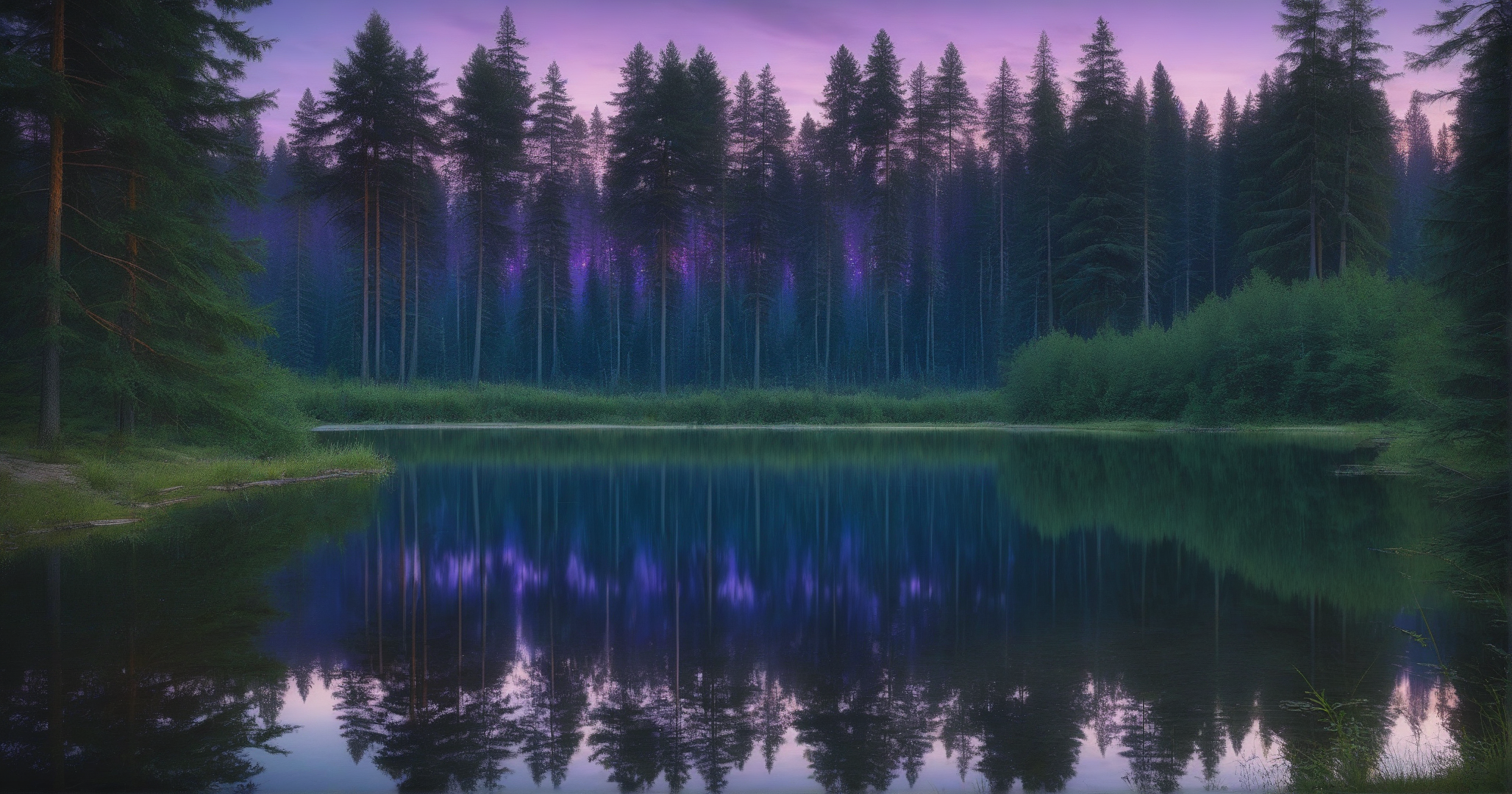
You know that feeling around 3 p.m. when your brain feels like a browser with 47 tabs open, three of them frozen, and you can't remember where the music is coming from? You've had coffee. You've stretched. You've stared at a wall for a solid minute. And yet your attention is still scattered, your patience is thin, and every notification feels like a personal attack. 🫠
Here's something your productivity guru isn't telling you: your brain might not need another hack. It might just need a tree.
What Is Attention Restoration Theory?
In 1984, psychologists Rachel and Stephen Kaplan noticed something curious. People who spent time in natural environments — even briefly — reported feeling more focused, less mentally tired, and more able to concentrate afterward. Not because nature is "relaxing" in a spa sense, but because it actively restores a specific kind of mental resource: directed attention.
Here's the simple version. Your brain has two modes of attention:
- Directed attention — the effortful, willpower-heavy kind you use to focus on a spreadsheet, resist checking your phone, or push through a difficult conversation. This mode drains fast. Think of it like a battery that doesn't come with a charger.
- Involuntary attention — the effortless kind that kicks in when something fascinating grabs you. A sunset. A bird doing something ridiculous. The way light filters through leaves. This mode doesn't cost anything. In fact, it recharges the other one.
Attention Restoration Theory (ART) proposes that natural environments engage involuntary attention so gently that your directed attention gets a break — and comes back stronger. It's not meditation. It's not a productivity system. It's just… nature doing what it's been doing for millions of years: quietly holding your attention without asking you to try.
The Science Just Got a Major Upgrade
ART has been around for decades, but until recently, most evidence came from self-reports and behavioral tests. People said they felt better after time in nature. Sure. But what was actually happening inside their brains?
Three studies published in 2025 finally gave us hard electrophysiological and cognitive data — and the results are compelling.
Nature imagery changes how your brain processes mistakes. Researchers Collins and colleagues (2025) published an EEG study in Frontiers in Human Neuroscience showing that viewing natural scenes modulates something called error-related negativity (ERN) — a brain signal that fires when you make a mistake. After exposure to nature imagery, participants showed reduced ERN amplitude, meaning their brains reacted less harshly to errors. In plain language: nature doesn't just make you feel calmer. It literally changes how your brain responds to failure. That's huge for anyone who spirals after a bad email or a missed deadline. 💜
Natural environments sharpen your attention. Piedimonte and team (2025) used the Posner cueing paradigm — a gold-standard test of attentional orienting — in Brain Sciences and found that people exposed to natural environments shifted their attention faster and more accurately than those exposed to urban scenes. Your brain doesn't just feel like it's working better after time in nature. It is working better. The evidence is in the milliseconds.
Nature reduces cognitive fatigue — objectively and subjectively. Marois and colleagues (2025) in the Journal of Environmental Psychology measured both self-reported mental tiredness and objective cognitive performance, finding that nature exposure reduced fatigue on both fronts. You feel less drained and you perform better. The gap between how you feel and how you function closes.
Put together, these studies paint a clear picture: nature isn't a nice-to-have. It's cognitive infrastructure. Your brain evolved in environments with trees, water, and open skies — and it still runs best when it gets regular doses of those inputs.
How to Get Your Nature Fix (Even If You Live in a Concrete Box)
You don't need a cabin in the Pacific Northwest. You don't even need a park within walking distance. Here are practical, low-friction ways to give your brain the nature exposure it craves:
The five-minute window reset. Stuck at a desk? Look out a window at anything with greenery for five minutes. Studies show even brief exposure to natural views reduces cognitive fatigue. No commute required. If your window faces a brick wall… well, put a plant in front of it. 🌴
The commute detour. Add one block to your walk that takes you past a tree, a garden, or a body of water. One block. That's it. Your future self will thank you when 3 p.m. hits and your brain still has juice.
Nature audio when you can't get outside. Can't step out? Put on a nature soundscape — rain, forest ambience, ocean waves — and close your eyes for three minutes. The auditory pathway activates similar restorative networks. It's not the same as being outside, but it's a solid placeholder.
The "green lunch" rule. Eat one meal a day outside, even if it's on a fire escape or a sidewalk bench. Pairing food with natural light and fresh air creates a compound restorative effect. Your brain associates the break with recovery, not just fuel.
Digital nature, strategically. Yes, screens are part of the problem. But a well-chosen nature wallpaper, a short forest video on your phone, or a nature photo during a work break can provide a micro-dose of restoration. It's not a replacement for real nature — but it's better than another meme scroll.
Give Your Brain a Soft Landing
Mental fatigue isn't a character flaw. It's a signal — your directed attention battery is blinking red, and no amount of willpower is going to fix that. The science is clear: nature restores the kind of focus that hustle culture keeps draining.
You don't need to move to the woods. You just need to remember that your brain has a nature setting — and it's been waiting for you to switch it on.
If you're looking for more gentle, science-backed ways to reset your nervous system throughout the day, Peacify has guided sessions designed to give your mind that soft landing it deserves. No pressure, no performance — just a quiet place to land. 💜
References:
- Collins et al. (2025). Error-related negativity modulation by natural scene exposure. Frontiers in Human Neuroscience.
- Piedimonte et al. (2025). Attentional orienting in natural versus urban environments: a Posner cueing study. Brain Sciences.
- Marois et al. (2025). Objective and subjective impacts of nature exposure on cognitive fatigue. Journal of Environmental Psychology.