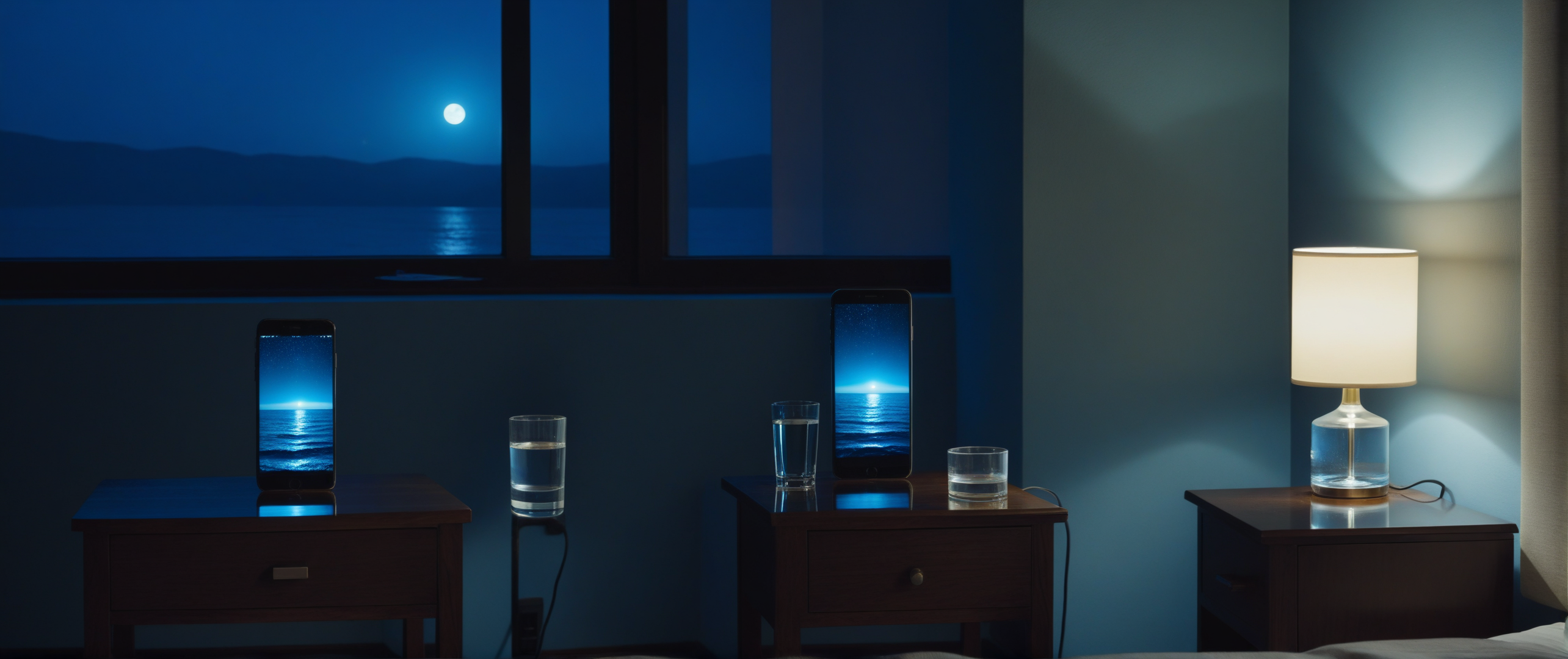
The ceiling fan rotates in a rhythmic, hypnotic circle, yet your mind is racing at a hundred miles per hour. It is 2:14 AM, and suddenly, a social blunder you made in 2016 feels as urgent and devastating as a current crisis. You try to focus on the heaviness of your limbs, but your brain has decided that now—and only now—is the optimal time to audit your entire life, catalog your unfinished tasks, and rehearse every possible catastrophe waiting for you tomorrow. This isn' quite just "overthinking." There is a profound, biological reason why the quiet of the night acts as a megaphone for your deepest anxieties. 🌙
The 2am phenomenon: Why worries grow in the dark
During the daylight hours, the human brain is heavily occupied by "top-down" processing. You are navigating traffic, responding to emails, listening to podcasts, and interacting with colleagues. This constant stream of external stimuli provides a form of "cognitive masking." Your attention is anchored to the physical world, leaving very little room for the internal monologue to wander into darker territories. However, as soon as you lie down in a darkened, silent room, that external scaffolding collapses.
When external distractions vanish, the brain shifts into what neuroscientists call the Default Mode Network (DMN). The DMN is a large-scale brain network that becomes active when you are not focused on the outside world. It is the seat of self-referential thought, daydreaming, and remembering the past. While the DBM is essential for creativity and self-awareness, it is also the engine of rumination. Without the "noise" of the day to keep it tethered to the present, the DMN begins to scan your internal landscape for unresolved conflicts.
This phenomenon is often exacerbated by a process known as cognitive decoupling. As you drift toward sleep, the boundaries between your conscious thoughts and your subconscious fears begin to blur. Research into the psychology of nocturnal rumination suggests that the lack of sensory input allows the brain to enter a state of "hyper-vigilance." In this state, the brain treats an intrusive thought about a work deadline with the same biological urgency as a physical threat. The darkness doesn't just hide your surroundings; it removes the buffers that usually protect your psyche from its own intrusive patterns.
The Cortisol Loop: What happens to your nervous system at night
The mental spiral of midnight anxiety is rarely just a psychological event; it is a full-body physiological cascade. To understand why a single worried thought can lead to a racing heart and a sudden burst of energy, one must look at the Hypothalmic-Pituitary-Adrenal (HPA) axis. This is the body's central stress response system.
When a ruminative thought triggers a sense of threat, the hypothalamus signals the pituitary gland, which in turn instructs the adrenal glands to release cortisol and adrenaline. Under normal circumstances, cortisol follows a circadian rhythm: it peaks in the morning to help you wake up (the Cortisol Awakening Response) and tapers off in the evening to allow for rest. However, when nighttime anxiety takes hold, this rhythm is disrupted.
The "Cortisol Loop" occurs when a stressful thought triggers a spike in cortisol, which physically alerts the body to danger. This physiological arousal—increased heart rate, shallow breathing, and heightened temperature—is then interpreted by the brain as proof that there is, indeed, something to worry about. You are essentially caught in a feedback loop: the thought creates the physical stress, and the physical stress reinforces the thought. 💜
This cycle is particularly damaging to sleep architecture. High levels of nocturnal cortisol inhibit the production of melatonin, the hormone responsible for signaling to your body that it is time to sleep. As cortisol rises, your body enters a state of sympathetic nervous system dominance (the "fight or flight" mode) rather than the parasympathetic dominance (the "rest and digest" mode) required for deep, restorative REM and slow-wave sleep. Over time, this isn't just a single bad night; it becomes a chronic disruption of the circadian rhythm that can lead to systemic inflammation and decreased cognitive function.
3 Grounding techniques to stop the spiral
Breaking the loop requires more than just "trying to relax." Because the anxiety is happening in both the mind and the body, your intervention must be dual-pronged: you must calm the thought and signal safety to the nervous system.
The first technique is the 5-1-5 Physiological Sigh. This is a specific breathing pattern that has gained significant traction in recent neurobiological research, including work discussed by Dr. Andrew Huberman of Stanford University. The technique involves taking a deep breath in through the nose, followed by a second, shorter "sharp" inhale on top of it to fully reinflate the alveoli (the tiny air sacs in your lungs), and then performing a very long, slow exhale through the mouth. This double-inhale and extended exhale works to rapidly increase the volume of oxygen and stimulate the vagus nerve, which acts as a biological "brake" on the sympathetic nervous system, effectively forcing your heart rate to slow down. 🧘
The second technique is Sensory Grounding, often called the 5-4-3-2-1 method. When the mind is trapped in a future-oriented catastrophe or a past-oriented regret, you must pull it back into the physical present. Take a moment to identify five things you can see in the shadows of your room, four things you can feel (the texture of the sheets, the weight of the duvet), three things you can hear (the hum of the AC, your own breathing), two things you can smell, and one thing you can taste. By forcing the brain to process concrete, sensory data, you are re-engaging the prefrontal cortex and pulling resources away from the hyper-reactive amygdala.
The third technique is Cognitive Offloading, often referred to as a "Brain Dump." Much of nighttime anxiety stems from the brain's attempt to use "working memory" to prevent you from forgetting important tasks. By keeping these worries active in your mind, you are maintaining a state of high cognitive load. Keeping a notebook by your bed allows you to physically externalize these thoughts. Writing down the "to-do" list or the "worry list" signals to the brain that the information is safely stored elsewhere, allowing the DMN to settle and the HPA axis to descend from its state of alert.
Master your nighttime routine with Peacify
Reclaiming your sleep is not about willpower; it is about biology. By implementing structured, science-backed interventions, you can retrain your nervous system to recognize the night as a period of safety rather than a period of surveillance. Small, consistent shifts in how you approach the twilight hours can prevent the cortisol spike before it ever begins.
If you find yourself frequently caught in the midnight loop, the Peacify app is designed to help you bridge the gap between anxiety and rest. Our "Nighttime Wind-down" feature uses guided physiological sigh protocols and sensory-focused audio landscapes to help you transition from the high-alert state of the day into a deep, parasympathetic state. By following our structured evening routines, you can provide your brain with the external scaffolding it needs to quiet the internal monologue and finally achieve the restorative sleep you deserve. ✨