Why Breathing Exercises Actually Work: The Neuroscience Behind the Calm
You've heard it a thousand times: "just breathe." It sounds like the wellness equivalent of "have you tried turning it off and on again?" Simple. Dismissive. Maybe a little patronizing.
But your nervous system doesn't care about your skepticism. When you slow your breath, something measurable happens inside your body — within seconds.
Breathing exercises aren't a placebo. They're one of the few things you can do that directly hacks your autonomic nervous system. Here's the science of why.
Your Breath Controls Your Nervous System (Literally)
Your autonomic nervous system has two branches: the sympathetic (fight-or-flight) and the parasympathetic (rest-and-digest). For most of your life, you assumed this system was entirely involuntary — something that just happens to you.
That changed in 2014, when researchers at Radboud University published a landmark study in PNAS proving that humans can voluntarily influence their autonomic nervous system through controlled breathing. The study showed that practitioners of the Wim Hof Method could trigger measurable sympathetic activation (elevated adrenaline and norepinephrine) followed by parasympathetic rebound — and even attenuate their immune response to bacterial endotoxin.
Your breath is the remote control. You just didn't know you were holding it.
The Vagus Nerve: Your Body's Brake Pedal
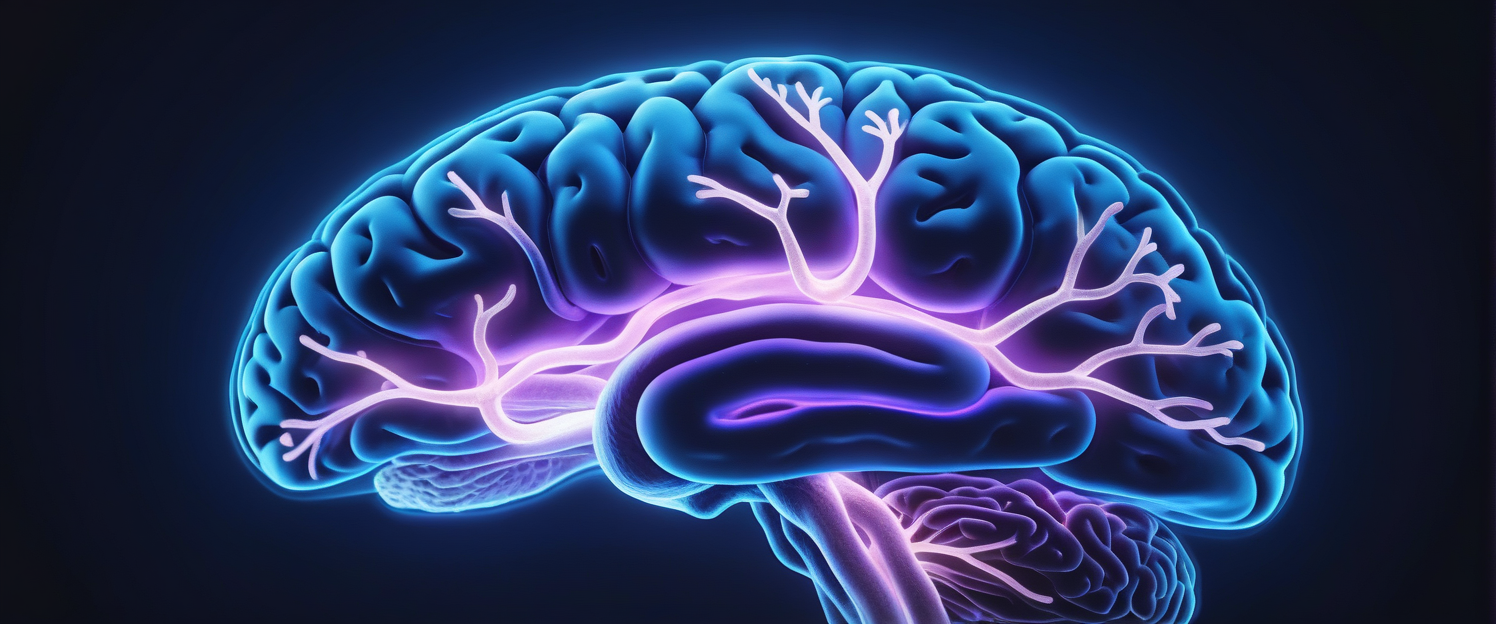
The vagus nerve is the longest cranial nerve in your body, running from your brainstem down to your gut. It's the main highway of the parasympathetic nervous system — your body's brake pedal.
When you breathe slowly with an extended exhale (like 4 seconds in, 6 seconds out), you directly stimulate the vagus nerve. A 2021 study published in Scientific Reports found that just 5 minutes of this breathing pattern significantly increased vagal tone (measured as high-frequency heart rate variability) and reduced state anxiety in both young and older adults.
The older adults showed an even bigger increase in vagal tone than the younger ones — meaning if you thought you needed more time to "reset," the science says otherwise.
Source: Scientific Reports, CNRS 2021
The mechanism: Slow breathing → increased baroreceptor sensitivity → enhanced vagal outflow → parasympathetic dominance. Your heart rate slows. Your blood pressure drops. Your body stops treating you like you're being chased by a bear.
Heart Rate Variability: The Sweet Spot at 6 Breaths Per Minute
Here's where it gets elegant. Your heart rate naturally fluctuates with your breathing — it speeds up slightly when you inhale and slows when you exhale. This is called respiratory sinus arrhythmia, and it's a sign of a healthy nervous system.
When you breathe at approximately 6 breaths per minute (about 10 seconds per full breath cycle), something called cardiorespiratory coherence occurs. Your heart rate oscillations synchronize perfectly with your respiratory cycles, and your heart rate variability reaches maximum amplitude.
This isn't theoretical. A comprehensive review in Neuroscience & Biobehavioral Reviews (covering 210 references and 20+ years of research) confirmed that resonance frequency breathing at ~6 breaths/min creates the strongest baroreflex amplification — essentially tuning your nervous system to its optimal frequency.
Source: Neuroscience & Biobehavioral Reviews 2022
Think of it like finding the resonant frequency of a wine glass. Hit the right note, and the vibration amplifies. Breathe at the right rate, and your nervous system coherence amplifies.
CO2: The Molecule Nobody Talks About
Here's what almost no one explains: when you're stressed, you hyperventilate. Even subtly. And hyperventilation blows off too much carbon dioxide.
Low CO2 sounds good until you realize CO2 is required for oxygen to actually leave your blood and enter your tissues (this is called the Bohr effect). When CO2 drops, your brain literally gets less oxygen — even though you're breathing faster.
A 2025 review from the Medical University of Białystok confirmed that chronic stress causes chronic hyperventilation, which reduces cerebral oxygen delivery. Slow breathing restores CO2 balance, improving cerebral oxygenation and reducing anxiety.
Source: Medical Sciences, MDPI 2025
Cyclic sighing — two quick inhales through the nose followed by a long exhale through the mouth — is particularly effective because the double inhale reinflates collapsed alveoli in your lungs, maximizing CO2 exchange.
Stanford Proved It Works Faster Than Meditation
In 2023, Stanford University ran a randomized controlled trial with 108 participants over 28 days, comparing four breathing techniques against mindfulness meditation. The result?
Breathing exercises produced significantly greater improvement in mood than mindfulness meditation (p < 0.05). And cyclic sighing was the winner — it produced the greatest increase in positive affect and the largest reduction in respiratory rate.
The study found that participants who showed the highest reduction in respiratory rate also showed the highest daily increase in positive affect. The correlation was clear: slower breathing = better mood.
90% of participants reported positive experiences. 74% found the interventions easy. And the entire daily practice was just 5 minutes.
Source: Cell Reports Medicine, Stanford 2023
GABA: The Chemical Calm
Your brain has a primary inhibitory neurotransmitter called GABA. It's essentially your brain's brake fluid — it reduces neuronal excitability and calms overactive neural circuits.
A randomized controlled trial using proton magnetic resonance spectroscopy (MRS) to directly measure brain chemistry found that yoga (which includes controlled breathing) significantly increased GABA levels in the cingulate cortex compared to a walking control group. And the GABA increase correlated directly with improvements in mood and anxiety scores.
Source: Journal of Alternative and Complementary Medicine 2010
More GABA = less anxiety. It's that direct.
So What Should You Actually Do?
The research points to three techniques, depending on what you need:
For daily anxiety management: Extended exhale breathing (4 seconds in, 6 seconds out). Stimulates the vagus nerve, increases parasympathetic tone. Five minutes is enough.
For rapid stress relief: Cyclic sighing (two quick inhales, one long exhale). Stanford's top performer for mood improvement. Do 2-3 minutes.
For acute stress reset: Resonance frequency breathing (~6 breaths per minute, ~10 seconds per cycle). Maximum heart rate variability and cardiorespiratory coherence.
None of these require an app. None of them cost money. But if you want guided sessions that take the thinking out of it, Peacify has you covered.
The Bottom Line
Breathing exercises work because they're not metaphorical. They're physiological. When you slow your breath, you're not "pretending" to be calm — you're sending real, measurable signals through your vagus nerve, your baroreceptors, and your brainstem that tell your body: you are safe right now.
Your nervous system listens. Every time.