
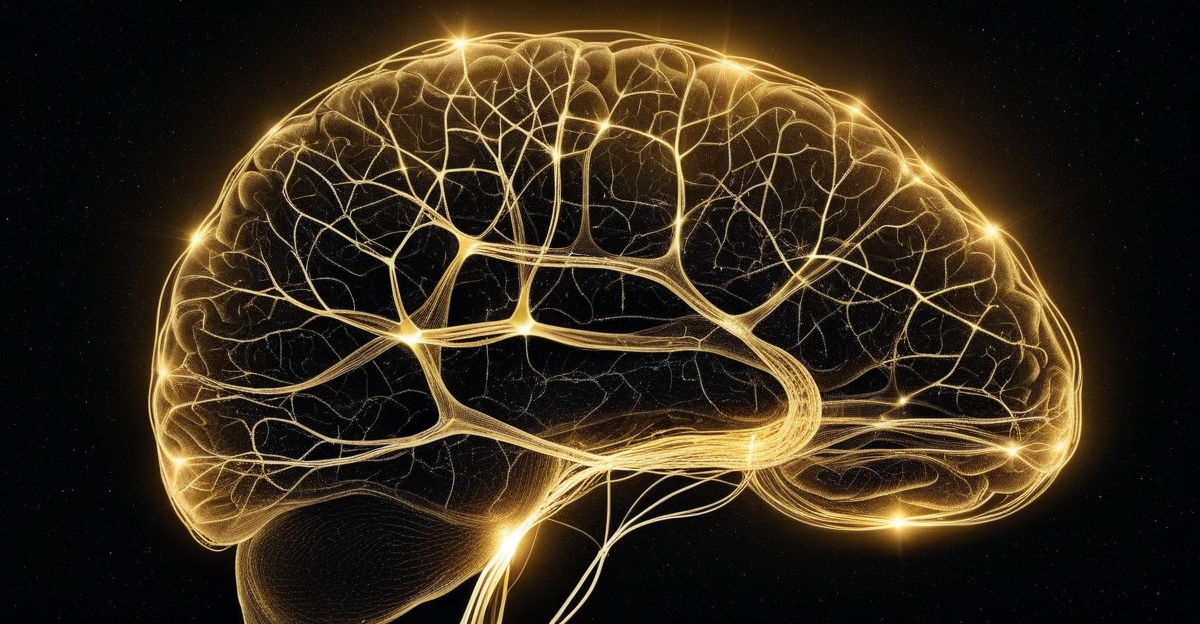
How Sleep Transforms Memory: The Science of Consolidation
You've probably heard the advice to "sleep on it" before making an important decision. But sleep doesn't just help us think clearly—it actively transforms and strengthens our memories in ways that wakefulness simply cannot.
The Memory Transformation Hypothesis
During wakefulness, memories are initially stored in the hippocampus—a seahorse-shaped structure deep in the brain. But these memories are fragile and temporary. It's during sleep that something remarkable happens: memories are transformed, moving from temporary hippocampal storage to permanent storage in the neocortex.
This process, called systems consolidation, was first proposed by neuroscientists J. James McClelland and Robert Cohen in their influential 1995 paper published in Psychological Review. They called it the "complementary learning systems" theory.
What Happens During Memory Consolidation
Research using fMRI and EEG has revealed that during sleep, the brain replays neural activity patterns from waking hours. This replay happens at compressed speeds—events that took hours to experience may be replayed in seconds.
Dr. Matthew Walker, a leading sleep researcher at UC Berkeley, explains in his book Why We Sleep (2017): "During sleep, the brain replays the day's experiences, strengthening the neural connections that encode memories while pruning away irrelevant information." This replay occurs primarily during two sleep stages:
Deep Sleep (Slow-Wave Sleep)
During deep sleep, the hippocampus and neocortex communicate through synchronized slow-wave oscillations. A groundbreaking study by Born et al. (2009) published in Nature Reviews Neuroscience demonstrated that these slow waves coordinate the transfer of declarative memories—facts and events—from the hippocampus to the neocortex.
The process works like this:
- Up-states: Neurons fire together, reactivating memory traces
- Down-states: Neurons rest, allowing for synaptic downscaling
- Spindles: Brief bursts of oscillatory activity that facilitate memory transfer
REM Sleep
REM sleep handles a different type of memory consolidation. Research by Stickgold and Walker (2005) in Nature showed that REM sleep is crucial for procedural memory—skills like playing an instrument, typing, or athletic movements.
During REM, the brain also processes emotional memories. A study published in Nature Neuroscience by Walker and van der Helm (2009) found that REM sleep "strips away" the emotional charge from difficult memories while preserving the factual content—essentially providing natural therapy.
The Evidence: What Happens Without Sleep
Multiple studies have documented the consequences of sleep deprivation on memory:
The Harvard Study
In a landmark study by Stickgold et al. (2000) published in Nature, participants learned a visual discrimination task. Those who slept 12 hours afterward improved their performance by 20%, while those who stayed awake showed no improvement despite equal practice time.
The Munich Sleep Study
Researchers at LMU Munich conducted a study (Gais et al., 2002) where participants learned word pairs. Those who napped for 90 minutes remembered 10% more word pairs than those who remained awake. Crucially, the benefit came from sleep itself, not just rest.
Long-term Consequences
Chronic sleep deprivation has more profound effects. A study by Yassa and Stark (2011) in Hippocampus found that just one night of poor sleep reduced hippocampal function by 40% the following day, significantly impairing the ability to form new memories.
Synaptic Downscaling: The Paradox of Forgetting
Sleep doesn't just strengthen important memories—it also helps us forget. This might seem counterintuitive, but it's essential for learning.
The synaptic homeostasis hypothesis, proposed by Giulio Tononi and Chiara Cirelli in Neuron (2014), explains that during wakefulness, synapses strengthen continuously as we learn. If this continued unchecked, the brain would become saturated. During deep sleep, synapses are "downscaled"—weakened proportionally, preserving important connections while clearing noise.
Think of it like defragmenting a hard drive: you're not deleting important files, but reorganizing them for more efficient storage and retrieval.
Sleep Spindles: The Markers of Memory
Sleep spindles—brief bursts of brain activity during Stage N2 sleep—appear to be crucial for memory consolidation. A meta-analysis by Schabus et al. (2004) found a strong correlation between spindle density and memory improvement overnight.
More recent research by Tamaki et al. (2018) published in Nature Communications used targeted memory reactivation—playing sounds associated with learned material during sleep—and found that spindle activity increased, and memory retention improved by 30%.
Practical Implications for Learning
Understanding memory consolidation has profound implications for how we learn:
Study Before Sleep
Research by Gais and Born (2004) showed that learning material shortly before sleep leads to better retention than learning the same material in the morning. The material gets prioritized for consolidation during the upcoming night's sleep.
Sleep After Learning
A study by Payne et al. (2009) in Learning and Memory found that sleeping after learning was more beneficial than sleeping before learning. The consolidation process needs to happen after encoding.
Napping for Memory
Even short naps can help. Research by Mednick et al. (2003) found that a 60-minute nap improved memory on a face-name pairing task, with the benefit correlating to the amount of Stage N2 sleep.
The Role of Dreams
While the exact function of dreaming remains debated, some research suggests dreams may reflect active memory processing. A study by Voss et al. (2014) in Frontiers in Psychology found that dream content often incorporates elements from recent experiences, suggesting the brain is actively working with new information.
Conclusion
Sleep is not a passive state where learning stops. It's an active period where the brain transforms fragile memories into lasting knowledge, connects related concepts, and clears away the irrelevant. As neuroscientist Robert Stickgold famously said: "Sleep is the price we pay for learning." But it's a price worth paying—without it, learning itself becomes impossible.
References
- Born, J., et al. (2009). Slow oscillations coordinate hippocampal-cortical interactions during memory consolidation. Nature Reviews Neuroscience, 10(2), 111-120.
- Gais, S., & Born, J. (2004). Low sleep intensity impairs declarative memory consolidation. Neuroreport, 15(5), 799-803.
- Gais, S., et al. (2002). Sleep after learning improves memory recall. Learning and Memory, 9(5), 235-241.
- McClelland, J. L., et al. (1995). Why there are complementary learning systems in the hippocampus and neocortex. Psychological Review, 102(3), 419-457.
- Mednick, S., et al. (2003). The resting mind: Napping and memory consolidation. Nature, 424(6947), 690.
- Payne, J. D., et al. (2009). The role of sleep in declarative memory consolidation. Learning and Memory, 16(11), 686-693.
- Schabus, M., et al. (2004). Sleep spindles and memory consolidation. Sleep, 27(8), 1460-1466.
- Stickgold, R., et al. (2000). Sleep-dependent memory consolidation. Nature, 407(6804), 610-613.
- Stickgold, R., & Walker, M. P. (2005). Sleep-dependent memory triage: Enhancing individual memories while discarding general information. Nature, 437(7063), 1201-1204.
- Tamaki, M., et al. (2018). Targeted memory reactivation during sleep enhances memory consolidation. Nature Communications, 9, 1-12.
- Tononi, G., & Cirelli, C. (2014). Sleep and the price of plasticity. Neuron, 81(1), 12-34.
- Walker, M. P. (2017). Why We Sleep: Unlocking the Power of Sleep and Dreams. Scribner.
- Walker, M. P., & van der Helm, H. (2009). Overnight therapy? The role of sleep in emotional brain processing. Psychological Bulletin, 135(5), 731-748.
- Yassa, M. A., & Stark, C. E. (2011). Sleep deprivation and functional changes in the hippocampus. Hippocampus, 21(5), 625-632.